
Discover Symi
Explore the beauty and charm of Symi, from its crystal-clear waters to its vibrant history and culture. Whether you’re seeking adventure or relaxation, Symi offers something for everyone. Start your journey here.
A Fairytale-like Island
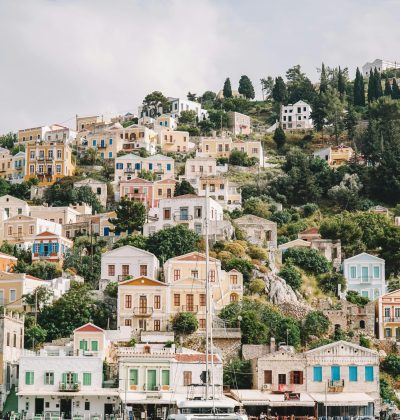
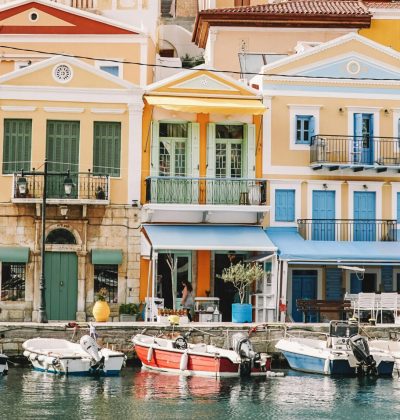
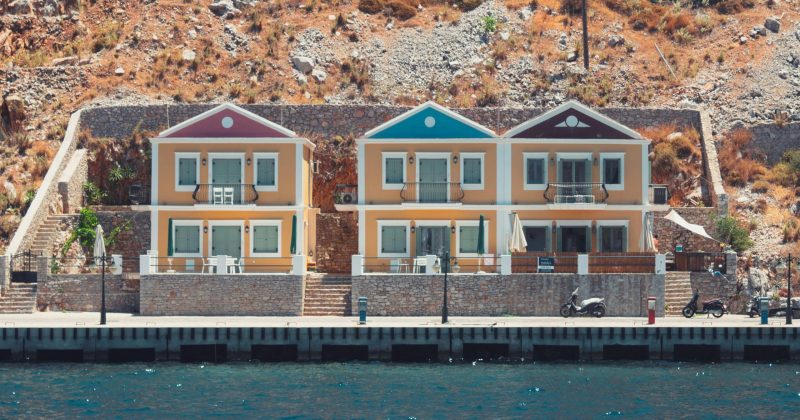
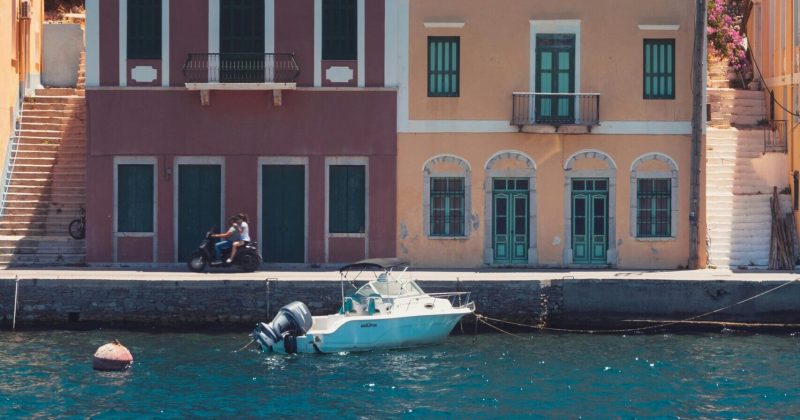
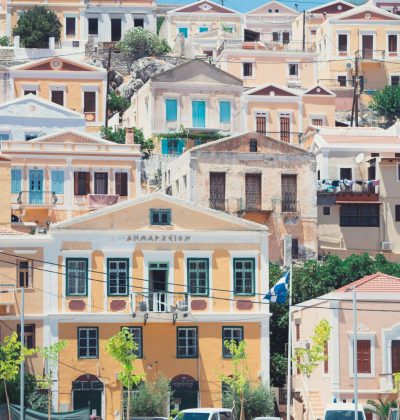
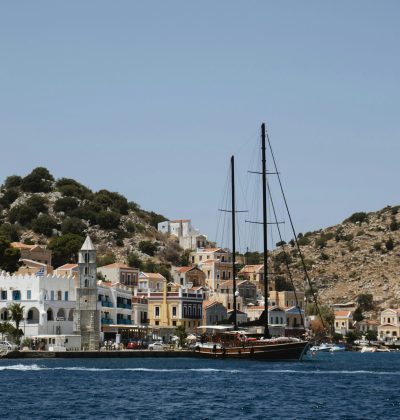
While approaching the port of Symi, one has the overwhelming feeling of entering a perfectly painted image of a scenic traditional village. As a rule, people remain agape and cannot take their eyes off the spectacular sight. A galore of two and three-storey traditional stone houses, painted in all colours but mostly in indigo, ochre, and terracotta, with red tiled roofs and cute little balconies with railings, set up the peculiarity of the island.
The few who can resist the superb spectacle of the town of Symi stretching its impeccable architecture—all of the buildings there have been listed—on the slopes of the surrounding hills, take off their eyes to look at their book guides. They see the picture of the port of Symi printed on their books. They know it might have been photoshopped; in all likelihood, they expected it to be better than the real thing. Still, when they lift their eyes again to marvel at the breathtaking sight, they realise it belies their expectations: Symi is more than words or photos can say!
Two and three-storey traditional stone houses, painted in all colours but mostly in indigo, ochre, and terracotta, with red tiled roofs and cute little balconies with railings set up the peculiarity of Symi.
Unique Experiences
Beaches
Beaches of Symi
Gastronomy
Local flavours of Symi
Religious Tourism
Monastery of the Archangel Michael Panormitis
Around the Island
The main town of Symi, commonly referred to by the same name as the island itself, is divided into two parts: the harbourside one, called Gialos, and the adjacent one on the slopes of the hills, called Chorio (village). The entrance of the horseshoe-shaped port is dominated by Roloi, a clock tower. Right in front of it, there is the statue of the fisher boy, Michalaki (Little Michael), which seems to be welcoming the visitors to the island.
The Town Hall, the cathedral, the square, and the Naval Museum of Symi are the main attractions on this side. The latter lends insight into the naval tradition of the island and boasts, amongst other things, exhibits representing the evolution of sponge fishing through the years. Visit the island’s main church, Agios Ioannis, with its marvelous pebble-stone courtyard and stone-built bell tower. Relax in a traditional cafe in one of Symi’s main squares—Kampos, Tarsanas, Skala—or enjoy shopping in the nearby stores.
Head to the upper part of the town to Chorio (aka Ano Symi) from a stony 500-steps stairway. The locals call it Kali Strata (Good Way!) with a wonderful walkway under the trees and a breathtaking view over Gialos. The charming colourful houses with their tiled roofs and the small alleys create a stunning locale. The interior of the houses is also of great interest; elaborately decorated ceilings, skylights, neoclassical decor on doors and windows as well as pebble stone floors are just some of the details you’ll see in these beautiful man-made structures.
The highest spot of the town is Kastro (castle) on the west, the remnants of a castle built by the Knights of St. John (14th c.). In its interior, you will see the church Panagia (Virgin Mary) of Kastro.
Tip: The best time of the day to walk around the town is in the afternoon when the sunlight highlights the colours and the island’s noble style.
At the location Myloi, visit Pontikokastro (the castle of mice!), where there is a prehistoric tomb as well as remnants of old mills, used in the past for crushing grains into flour. Some of them are households today. Behind the highest mountain of the island (560m) lies a beautiful cypress and pine tree forest. The forest at Kourkouniotis is home to 120 Byzantine wine presses, of which eleven have been restored. The island held a fine tradition in winemaking up to the 18th c. The most significant event is Symi’s Festival, which hosts a large number of cultural events such as classical and modern music concerts, dance, theater, cinema, and literature evenings from July to September every year.
Extra Tip: In case you are interested in looking at the tools and equipment used by the family ancestors who worked in the jewelry workshop, you could visit the ‘The Folklore Museum’, a private museum, where these were donated for historical purposes.
From Skala Square on the harbour, climb the broad steps of the Kali Strata. Follow prominent signs (blue arrows) to the town’s two museums, through a series of alleyways. You’ll eventually find your way to the Archaeological Museum and the Symi Folklore Museum, which are side by side.
How to Get to Symi
By Air
Symi does not have its own airport, but the closest international airport is located on the nearby island of Rhodes.
Travelers can reach Rhodes Airport through direct flights from major cities across Europe and other parts of the world. From Rhodes Airport, the most convenient way to get to Symi is by taking a ferry.
By Ferry
Ferry connections to Symi are available from various ports, providing a scenic and enjoyable journey. The main ferry port on Symi is located in Gialos, the island’s main harbor.
Rhodes to Symi
Rhodes serves as a central transportation hub, making it a popular starting point for travelers heading to Symi. Regular ferry services operate between Rhodes and Symi, with several daily departures during the peak tourist season.
The ferry journey from Rhodes to Symi takes approximately one to two hours, depending on the type of ferry and route chosen. Travelers can choose from high-speed catamarans or traditional ferries, both offering comfortable amenities and stunning views of the Aegean Sea.
Plan Your Perfect Getaway to Symi Today!
Contact us for more details, availability, and to start planning your unforgettable stay in our charming island accommodation.